


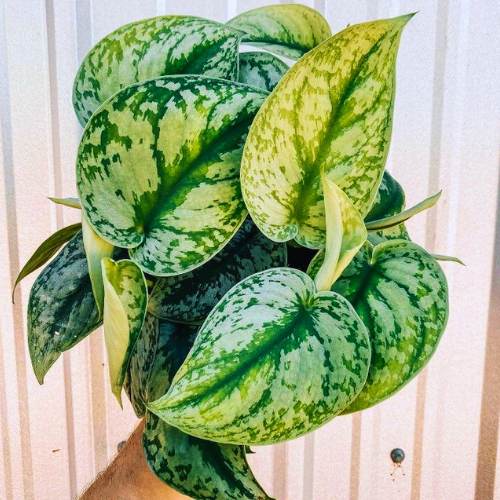

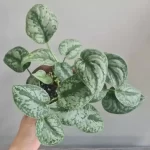


The Satin Pothos, scientifically known as Scindapsus pictus, is a popular tropical evergreen climbing vine admired for its striking foliage. Despite its common name, it is not a true Pothos (Epipremnum aureum) but belongs to the same family, Araceae.
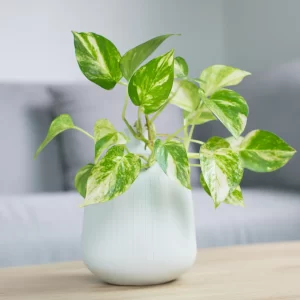
- Foliage: This is the plant’s main attraction. Its leaves are heart-shaped or ovate (especially when juvenile) and have a unique, slightly velvety, or satin-like texture. The color is typically a matte green to dark green, beautifully variegated with irregular splashes, spots, or blotches of silver, gray, or white. The underside of the leaves is usually paler and lacks the silvery markings. The amount and pattern of silver variegation can vary depending on the cultivar (e.g., ‘Argyraeus’ has more defined silver edges, ‘Exotica’ has larger silver splotches, and ‘Silvery Ann’ has more pronounced silver tips). Mature leaves can sometimes become pinnately lobed.
- Growth Habit: Scindapsus pictus is a vining plant. In its native tropical habitat (Southeast Asia, including Bangladesh, Borneo, India, and the Philippines), it climbs on tree trunks using aerial rootlets, reaching lengths of up to 10-12 feet. As a houseplant, it can be grown as a trailing plant in hanging baskets or on shelves, or trained to climb upwards on a trellis or moss pole. When given support to climb, the leaves tend to grow larger.
- Size: Indoors, Satin Pothos typically grows to 1.5 to 3 feet tall, though vines can reach much longer lengths (4-10 feet or more) if allowed to trail or climb extensively.
- Flowers and Fruit: While outdoor plants in their native habitat may produce small, insignificant flowers (a spadix enclosed by a spathe) followed by small berries, indoor Satin Pothos rarely blooms or fruits.
- Care Requirements (as a houseplant):
- Light: Prefers bright, indirect light. Direct sunlight can scorch the leaves and diminish the variegation. It can tolerate lower light, but the silver markings might become less prominent.
- Water: Likes consistently moist but not soggy soil. Allow the top inch or two of soil to dry out between waterings to prevent root rot. It’s relatively drought-tolerant.
- Temperature and Humidity: As a tropical plant, it thrives in warm, humid environments (ideally 65-85°F or 18-29°C). Protect it from cold drafts. Higher humidity is beneficial, which can be achieved through misting or a pebble tray.
- Soil: Requires a well-draining potting mix, often containing ingredients like perlite, peat moss, or pine bark.
- Toxicity: All parts of the Satin Pothos are toxic if ingested due to insoluble calcium oxalates in the sap, causing irritation. It should be kept away from pets and children







There are no reviews yet.