

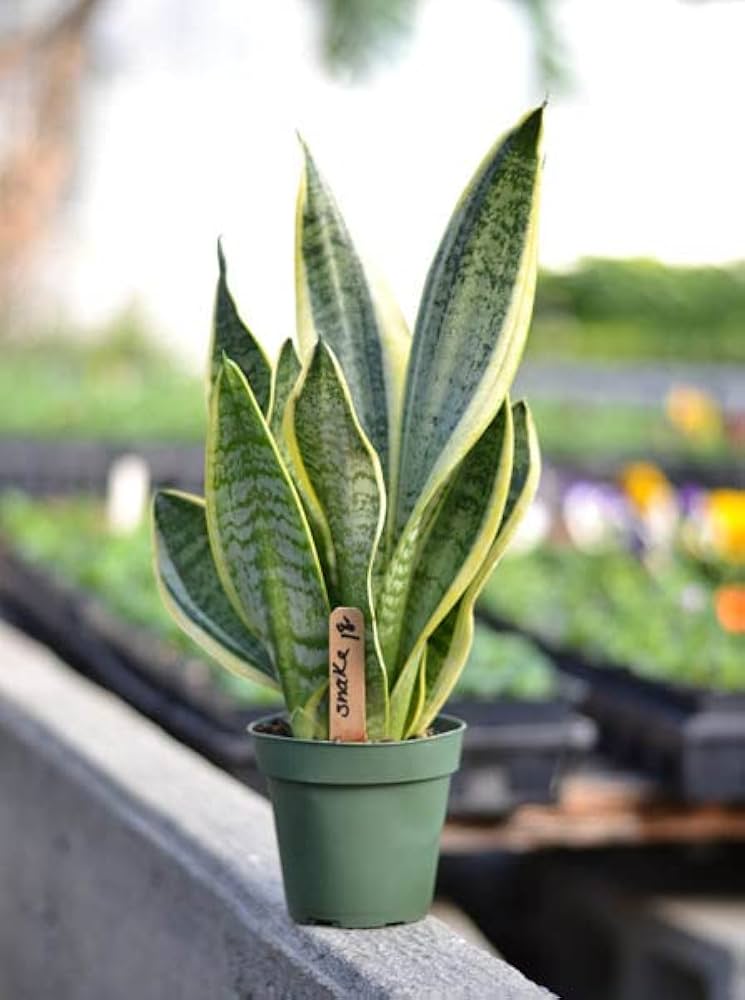
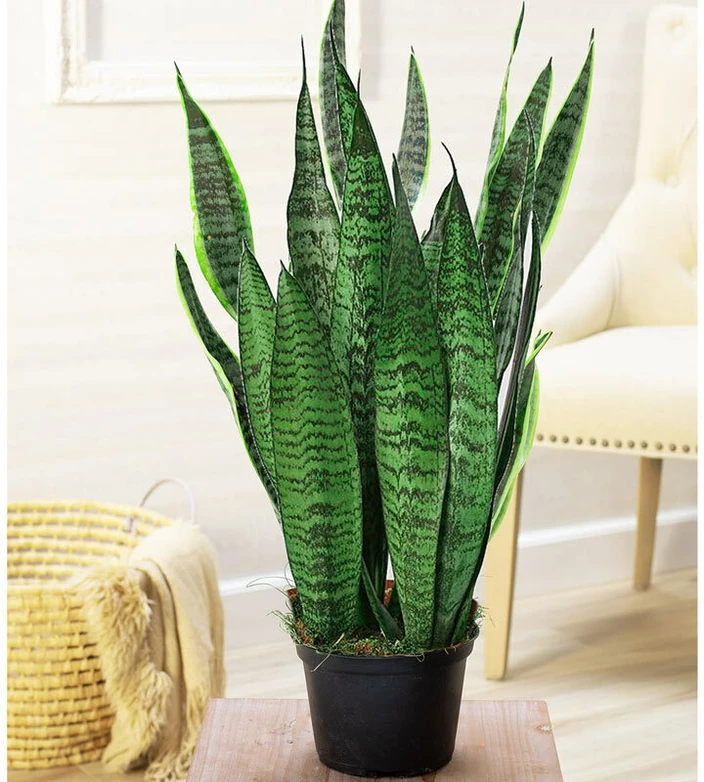
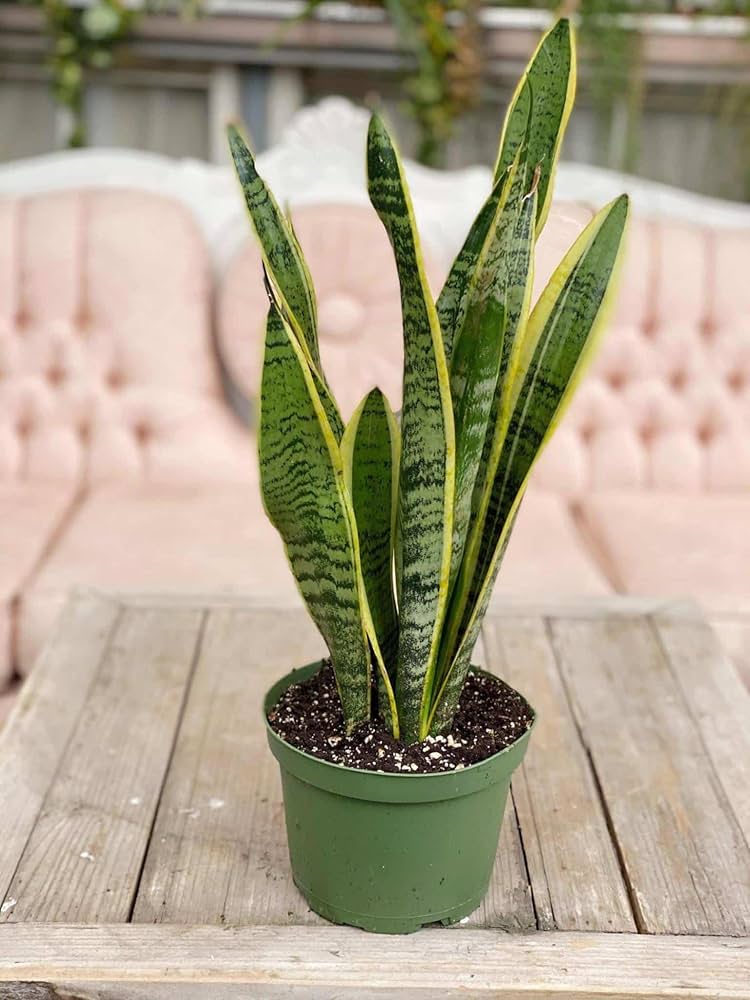

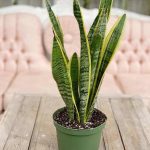

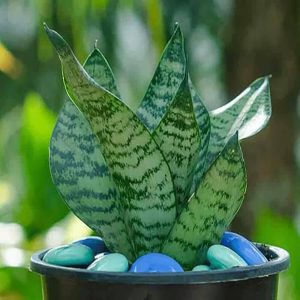
The Snake Plant, scientifically known as Dracaena trifasciata (formerly Sansevieria trifasciata), is one of the most popular and recognizable houseplants globally. It’s highly valued for its striking appearance, incredible resilience, and air-purifying qualities.
- Foliage: The most distinctive feature of the Snake Plant is its stiff, sword-like, upright leaves that grow directly from a basal rosette. These leaves can vary greatly in height and color depending on the cultivar:
- Classic Varieties: The most common varieties feature dark green leaves with distinctive horizontal bands or mottling of lighter green, grey-green, or silvery-green.
- Variegated Varieties: Many popular cultivars boast vibrant yellow or creamy-white margins (e.g., ‘Laurentii’) or striking vertical white stripes (e.g., ‘Bantel’s Sensation’).
- Texture: The leaves are typically thick, fleshy, and somewhat leathery or succulent, allowing them to store water efficiently.
- Shape: While many are tall and erect, some cultivars have a more compact, rosette-forming habit (e.g., ‘Hahnii’ or “Bird’s Nest Sansevieria”), or even cylindrical leaves (e.g., Dracaena angolensis, previously Sansevieria cylindrica).
- Growth Habit: Snake Plants are evergreen herbaceous perennials that grow in dense clumps, spreading via a creeping rhizome system that can be either above or below ground. They are known for their strong, architectural form.
- Size: As a houseplant, their size can vary significantly by cultivar, ranging from small dwarf varieties that are only 6-8 inches tall (e.g., ‘Hahnii’) to towering specimens that can reach 2 to 4 feet (60-120 cm) or even taller in optimal conditions.
- Flowers and Fruit: While rare in indoor cultivation, mature Snake Plants can produce small, greenish-white to cream-colored flowers on a tall stalk. These flowers are often fragrant, especially at night, and can be followed by small orange berries. However, the plant is almost exclusively grown for its foliage.
- Origin: Native to tropical West Africa, from Nigeria east to the Congo, where they thrive in dry, rocky areas and open grasslands.
- Common Names: Due to their appearance, they are famously known as “Snake Plant” or “Mother-in-Law’s Tongue” (referencing the sharp, pointed tips and the “sharp tongue” idiom). Other names include “Saint George’s Sword” and “Viper’s Bowstring Hemp” (historically, strong fibers from the leaves were used for bowstrings).
- Care Requirements (as a houseplant): The Snake Plant’s reputation for being “almost indestructible” is well-earned, making it one of the easiest houseplants to care for.
- Light: Extremely tolerant of a wide range of light conditions, from very low to bright indirect light. They will grow best and maintain their vibrant variegation in bright, indirect light, but they can surprisingly survive in dimly lit corners. Avoid intense, direct afternoon sun as it can scorch the leaves.
- Watering: This is the most crucial aspect of care, as overwatering is the most common killer. Snake Plants are highly drought-tolerant. Allow the soil to dry out completely between waterings, and then water thoroughly. In winter, reduce watering significantly (often once a month or even less).
- Temperature: Prefers warm temperatures between 18-35°C (65-95°F). They are sensitive to cold drafts and temperatures below 10°C (50°F).
- Humidity: Tolerates average household humidity well and does not require high humidity.
- Soil: Requires a very well-draining potting mix. A succulent or cactus mix, or a regular potting mix amended with plenty of perlite or coarse sand, is ideal to prevent waterlogging and root rot.
- Toxicity: All parts of the Snake Plant are considered mildly toxic if ingested by humans or pets (cats, dogs, horses) due to the presence of saponins. Ingestion can cause oral irritation, stomach upset, nausea, vomiting, and diarrhea. Keep out of reach of curious children and pets.
- Benefits: Beyond its aesthetic appeal and ease of care, the Snake Plant is renowned for its air-purifying capabilities. It’s one of the few plants that converts carbon dioxide into oxygen at night through Crassulacean Acid Metabolism (CAM), making it an excellent choice for bedrooms. It can also filter out common indoor air toxins like formaldehyde, benzene, xylene, and trichloroethylene.














There are no reviews yet.